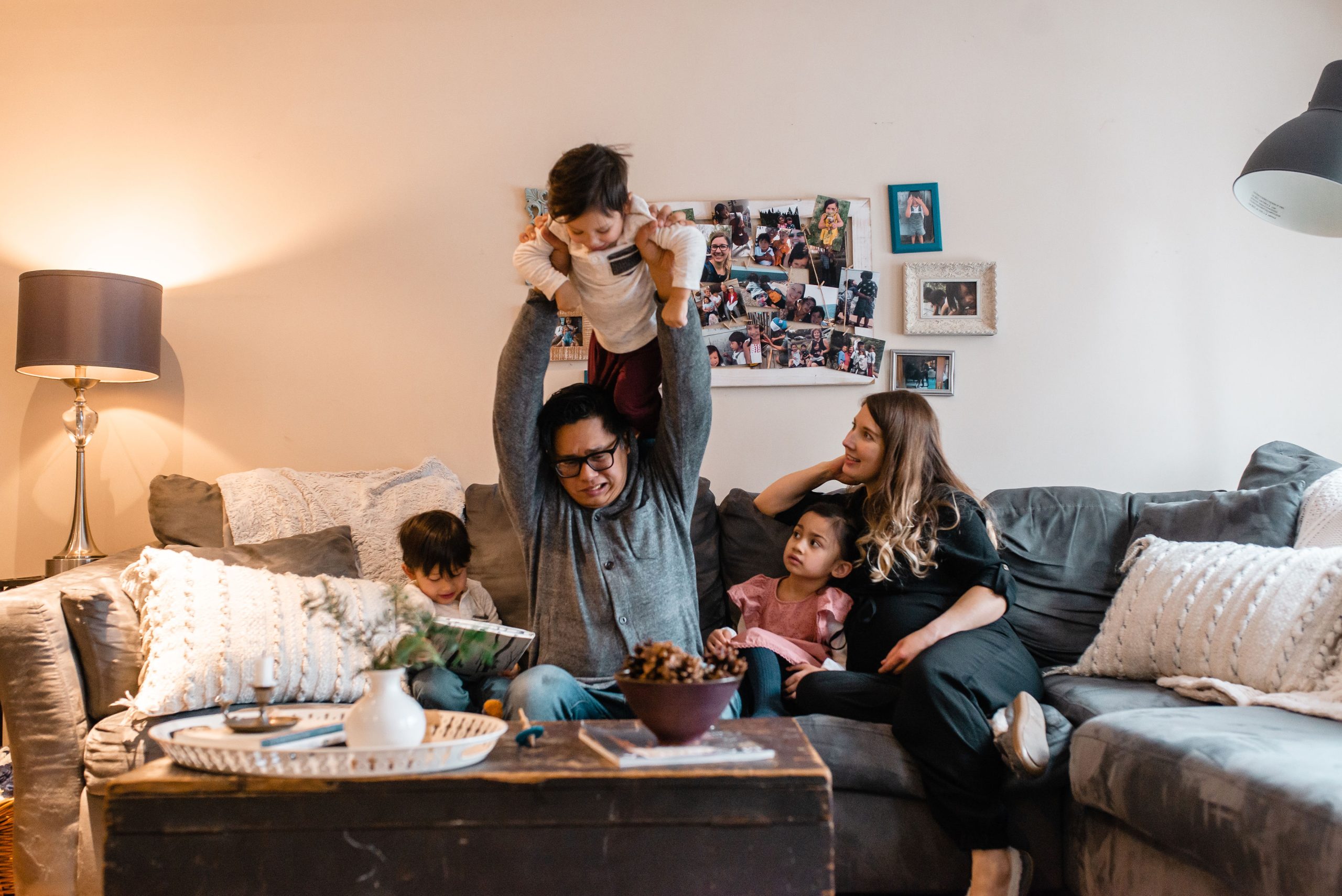
There are topics we only bring up in a whisper, even with close friends. Life as a couple after having a child is one of them. I hesitated for a long time before writing about this. Who am I to talk about it? Can my experience really shed light, offer comfort, or resonate with anyone? I have no certainty. But what I do know is that parenting profoundly shakes a couple sometimes gently, often violently. And nearly all of us go through these upheavals without talking about them as much as we should.
In two days, my partner and I will celebrate 20 years together. Twenty years of growing side by side, from age 14 to 34. Twenty years of navigating our own metamorphoses. It’s not a trophy, nor proof that we “know better than others.” It’s simply a reality that shapes my perspective: love isn’t a fixed state, it’s a series of rebirths. So today, I want to open this conversation. To speak with honesty, without magic solutions or certainties. Just the essentials: what parenthood teaches us, takes from us, gives us, and forces us to rebuild together or side by side.
Becoming a parent is an immense upheaval: physical, hormonal, identity-shifting… and relational. Overnight, this parenting journey throws us into unfamiliar roles, and it becomes so easy to lose ourselves as a couple in the chaos of sleepless nights, intense emotions, and new responsibilities. When we became parents, we had already been together for 14 years. Everything seemed aligned: studies, careers, house, dog… the logical next step. It would have been easy to believe our relationship was strong, ready to withstand anything. And yet. I often wondered how brand-new couples, those who become parents after just a few months together manage it. It must be so much harder, I told myself.
The truth? A strong enough storm can shake any foundation. And conversely, even in the heart of the chaos, we can learn to rebuild whether we’ve been together one year or twenty.
When we become parents, we experience all at once our personal transformation, the discovery of the parent we are becoming, the encounter with the parent our partner is becoming, the partial grief of who we once were, and the grief of who we once loved. It’s enormous, and it’s normal to feel destabilized. If we allow ourselves to fall into uncertainty, into change and accept this new beginning, then the most precious possibility opens up: rediscovering the other through a different light. The essence remains, but the personality shifts, aptitudes evolve, patience fluctuates… and our parenting selves gradually take up more space.
Parenthood lives in dualities, small ones and big ones. Wanting to be two while needing to show up for a third. Craving rest while having to keep going. Missing each other while lacking the space to reconnect. Loving deeply while sometimes feeling frustration, doubt, or resentment. Moving forward as a couple through parenthood means accepting that these dualities are normal and that they can coexist. The most delicate task is ensuring that one doesn’t crush the other. With the weight of mental load, fatigue, and daily life, it would be easy to forget why this parenting journey began in the first place. But beneath every load of laundry, every routine, every sacrifice… lies the heart of the couple, sometimes buried, but still alive.
Mental load creeps in without warning. It piles up in invisible lists, endless anticipations, the constant “don’t forget to…” running through our minds. It doesn’t weigh the same on both partners, often due to habit, upbringing, reflex. And the exhaustion rarely comes from the number of tasks, but from the feeling of being the household’s invisible manager. Naming this load, sharing it, revisiting it together… isn’t weakness. It’s an act of love.
Before having a child, we had time to talk. Afterward, everything becomes fragmented: two sentences between two cries, two emotions between two naps. Parenthood exposes our wounds, expectations, insecurities. And suddenly, we must relearn how to speak to each other, to ask, to listen. It’s uncomfortable, but healing.
Sexuality after a child is something we almost never talk about. Yet it’s often the first place where the couple feels the shock. Fatigue, overstimulation, changed bodies, newfound vulnerability… desire doesn’t disappear, it transforms. Sometimes intimacy feels like a night-light: quiet, fragile, but present in a different way, an intimacy we never imagined we would share with anyone. And sometimes, that’s enough.
Loving before children is simple. Loving after is a renewed choice. Parenthood makes us fall, question, redefine ourselves. It forces us to look at each other differently and sometimes to restart the story from scratch. But if we accept that love will not look the same as before, it can become even more beautiful: stronger, softer, more conscious. A love that survived fatigue, doubts, chaos. A love that chose to rise again.
Parenthood spares no couple. It shakes, exposes, cracks. It also transforms, reveals, expands. Loving after a child isn’t loving despite parenthood, it’s loving through it. It’s accepting that the couple changes shape, moves through seasons, experiences distance, questions, fatigue, while still holding space for rediscovery. It’s not a failure to stumble. It’s not weakness to need readjustment. It’s the very condition of a living love.
So if you’re in the midst of a storm, know this: no one moves in a straight line. No one loves perfectly. No one comes out of parenthood unscathed, but we can emerge more genuine, more aware, more rooted. And maybe the greatest act of love is not avoiding the fractures, but choosing, again and again, to repair together what matters. In the end, a couple was never meant to be a place of perfection. It is a place of presence, of return, of beginning again.